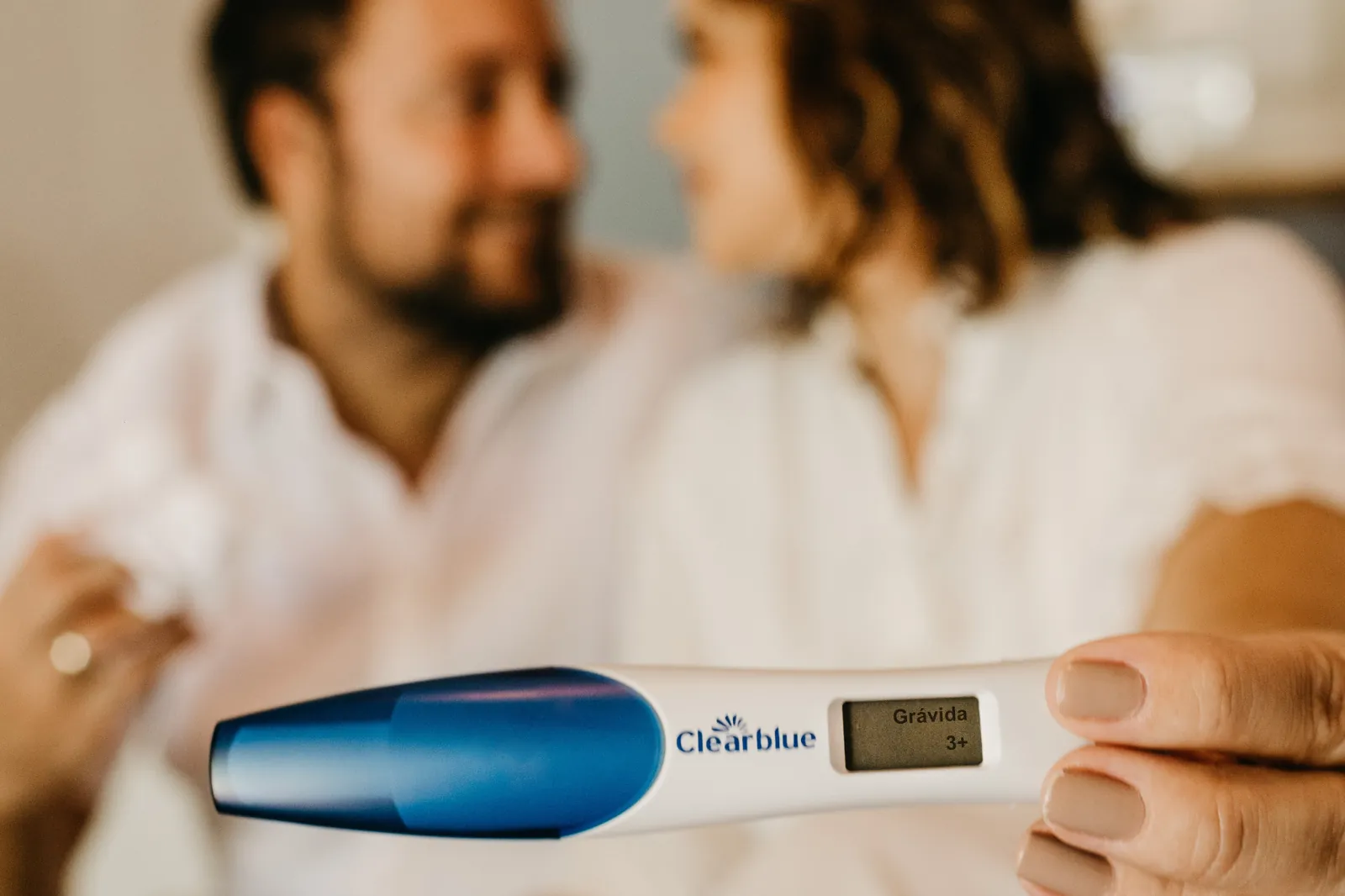
Diet does affect fertility, but not in the way most people hope. Food is not a cure for infertility, and no eating plan can override a blocked fallopian tube, low ovarian reserve, or a genuine medical cause. What nutrition can do is measurably shift the odds: several large studies link certain eating patterns to a lower risk of ovulation problems and to better sperm quality.
I'm Zahra Ataei, a registered dietitian (legitimerad dietist) working with women's hormonal health, PCOS, and metabolic health. Almost every week someone asks me whether changing their diet will help them get pregnant. It is a fair question, and it deserves an honest answer rather than a supplement list.
Here is what the research actually shows, where the evidence is strong, where it is weak, and when food is simply not the thing standing in your way.
What the research actually found
The most quoted evidence comes from the Nurses' Health Study II, which followed more than 17,000 women trying to conceive over eight years. Women whose eating and lifestyle habits most closely matched what the researchers called a "fertility diet" pattern had a substantially lower risk of infertility caused by ovulation problems. [1]
That pattern was not exotic. It meant more monounsaturated fat and less trans fat, more protein from plants than from animals, a lower glycaemic load, more full-fat rather than low-fat dairy, adequate iron, and a multivitamin containing folic acid. Combined with a healthy weight and regular activity, this was linked to the largest reduction in risk.
Two things matter here. First, this was an observational study, so it shows an association rather than proof that the diet caused the improvement. Second, it applied specifically to ovulatory infertility, which is only one cause among many. Diet was never shown to fix tubal, structural, or genetic causes.
The clearest single finding: trans fats and ovulation
If one dietary factor stands out, it is trans fat. In the same cohort, replacing just 2% of daily energy from carbohydrate with trans fat was associated with a 73% higher risk of ovulatory infertility. [2] That is a large signal from a small dietary change, and it is one of the few nutrition findings in this field that is genuinely striking.
Industrial trans fats are far less common in Sweden than they once were, but they still turn up in some fried foods, commercial baked goods, and certain processed snacks. Cutting them is one of the few pieces of fertility nutrition advice with real weight behind it.
Weight, insulin, and why ovulation stalls
Ovulation is exquisitely sensitive to metabolic signals. When insulin runs persistently high, the ovaries produce more androgens, which can disrupt the maturation and release of an egg. This is the central mechanism in PCOS, the most common cause of ovulation problems in women of reproductive age.
A 2024 systematic review and network meta-analysis of women with overweight or obesity found that the most effective strategies for improving ovulation, lowering BMI, and improving the hormonal profile combined exercise and dietary change with medication. [3] Lifestyle change was part of every top-ranked approach, though on its own it was not the single most effective. The review measured ovulation, BMI, and hormones, not live birth rates.
Being significantly underweight, or eating too little relative to training load, suppresses ovulation just as reliably. Fertility nutrition is not about eating less. It is about eating enough, and eating in a way that keeps blood sugar and insulin steady.
- Steady blood sugar beats restriction. Build meals around protein, fibre, and fat rather than cutting carbohydrates out.
- Under-eating stops ovulation too. Low energy availability is a common and under-recognised cause of missing periods.
- Modest weight change can be enough. Ovulation often returns before a goal weight is reached.
- For the mechanism in depth, see my guide to insulin resistance, weight, energy, and hormones.
- If you have PCOS, my article on why PCOS is being renamed PMOS explains what the diagnosis really describes.
Fertility is not only a woman's issue
Roughly half of fertility problems involve a male factor, and diet shows up in that research too. A systematic review of observational studies found that eating patterns rich in omega-3 fats, antioxidants such as vitamin C, vitamin E, selenium, zinc, and folate, and low in saturated and trans fats, were associated with better semen quality. [4]
One mechanism is oxidative stress, which can damage the DNA carried inside sperm. Sperm DNA fragmentation can affect conception and IVF success, and higher levels are linked to a greater risk of miscarriage, even when a standard semen analysis looks completely normal. [5] It is not yet part of routine testing. You can read more about this in Herafem's article on sperm DNA fragmentation.
A word of caution on supplements. A 2022 Cochrane review of antioxidants for male subfertility found the evidence too uncertain to draw firm conclusions: it may improve live birth and pregnancy rates, but the studies carried a serious risk of bias. [6] Antioxidant-rich food is a reasonable bet. Expensive antioxidant supplements are not a proven treatment.
What diet cannot fix
This is the part most fertility nutrition content leaves out. No diet will unblock a fallopian tube, reverse severe endometriosis, restore diminished ovarian reserve, or correct a chromosomal problem. Nutrition improves the terrain. It does not rebuild the anatomy.
If you are under 35 and have been trying for a year, or over 35 and have been trying for six months, that is the point to get a medical assessment rather than a new eating plan. The same applies at any age if your periods are irregular or absent, if you have had recurrent miscarriages, or if you suspect endometriosis or PCOS.
A medical assessment typically includes blood work, a review of your cycle, and, where relevant, a semen analysis for your partner. Medical investigation and nutrition work well side by side, and neither replaces the other.
What I actually recommend
Stripped of the noise, the evidence-based advice is unglamorous and mostly overlaps with ordinary healthy eating. That is not a disappointment. It means you do not need a special protocol, and you certainly do not need to buy anything.
- Build meals around whole foods. Diets favouring vegetables, fruit, whole grains, fish, and poultry are consistently linked to better fertility. [7]
- Avoid trans fats. The single most consistent dietary risk factor for ovulatory infertility.
- Take folic acid before conceiving. The one supplement with genuinely strong evidence, and it protects the pregnancy as much as the conception.
- Eat enough. Chronic under-eating and low energy availability suppress ovulation.
- Include the male partner. Semen quality responds to diet, and sperm take about three months to develop.
- Don't wait on food to solve everything. Run nutrition changes alongside a medical assessment, not instead of one.
- For the wider hormonal picture, see my article on the hormone balance diet.
So, does diet really affect fertility? Yes, meaningfully, but modestly, and mostly through ovulation, insulin, and sperm quality. It shifts the odds rather than guaranteeing an outcome. Anyone selling you a fertility diet that promises more than that is selling you hope, not evidence.
As a registered dietitian specialising in women's hormonal and metabolic health, I help women build the steady, realistic eating patterns that support ovulation without slipping into restriction. If you'd like a plan built around your body and your diagnosis, book a free consultation, or read more about my PCOS nutrition support.
Frequently asked questions
Work with a registered dietitian
Ready to make a lasting change?
Get personalized guidance from a registered dietitian who understands the struggle.
Book a Free Consultation (opens in new tab)Free 15-minute video call · No pressure, no obligation.
Sources
- 1. Chavarro JE, Rich-Edwards JW, Rosner BA, Willett WC. Diet and lifestyle in the prevention of ovulatory disorder infertility. Obstet Gynecol. 2007;110(5):1050-1058.
- 2. Chavarro JE, Rich-Edwards JW, Rosner BA, Willett WC. Dietary fatty acid intakes and the risk of ovulatory infertility. Am J Clin Nutr. 2007;85(1):231-237.
- 3. Ruiz-González D, Cavero-Redondo I, Hernández-Martínez A, et al. Comparative efficacy of exercise, diet and/or pharmacological interventions on BMI, ovulation, and hormonal profile in reproductive-aged women with overweight or obesity: a systematic review and network meta-analysis. Hum Reprod Update. 2024;30(4):472-487.
- 4. Salas-Huetos A, Bulló M, Salas-Salvadó J. Dietary patterns, foods and nutrients in male fertility parameters and fecundability: a systematic review of observational studies. Hum Reprod Update. 2017;23(4):371-389.
- 5. Robinson L, Gallos ID, Conner SJ, et al. The effect of sperm DNA fragmentation on miscarriage rates: a systematic review and meta-analysis. Hum Reprod. 2012;27(10):2908-2917.
- 6. de Ligny W, Smits RM, Mackenzie-Proctor R, et al. Antioxidants for male subfertility. Cochrane Database Syst Rev. 2022;5(5):CD007411.
- 7. Gaskins AJ, Chavarro JE. Diet and fertility: a review. Am J Obstet Gynecol. 2018;218(4):379-389.
Related articles

PMS Cravings: Why You Crave Sugar and Carbs Before Your Period
Craving chocolate, bread, or sweets right before your period isn't a willpower problem, it's hormonal. A registered dietitian explains why PMS cravings happen and how to manage them.
Read more
A Practical Guide to Eating More Fiber Every Day
Skip the theory. Here's exactly what to eat, in what amounts, to close the fiber gap, including a sample day that hits your target and how to get there without bloating.
Read more
How to Lose Fat Without Losing Muscle
Most diets strip away fat and muscle at the same time. A registered dietitian explains how to lose fat while holding on to the muscle you have, using protein, resistance training, a moderate deficit, and enough sleep.
Read more